Poland's Hydrogen Bus Experiment Backfires as Skyrocketing Fuel Costs Bury Budgets
Hydrogen Bus Fuel Bills Devastate Polish Transit Authorities
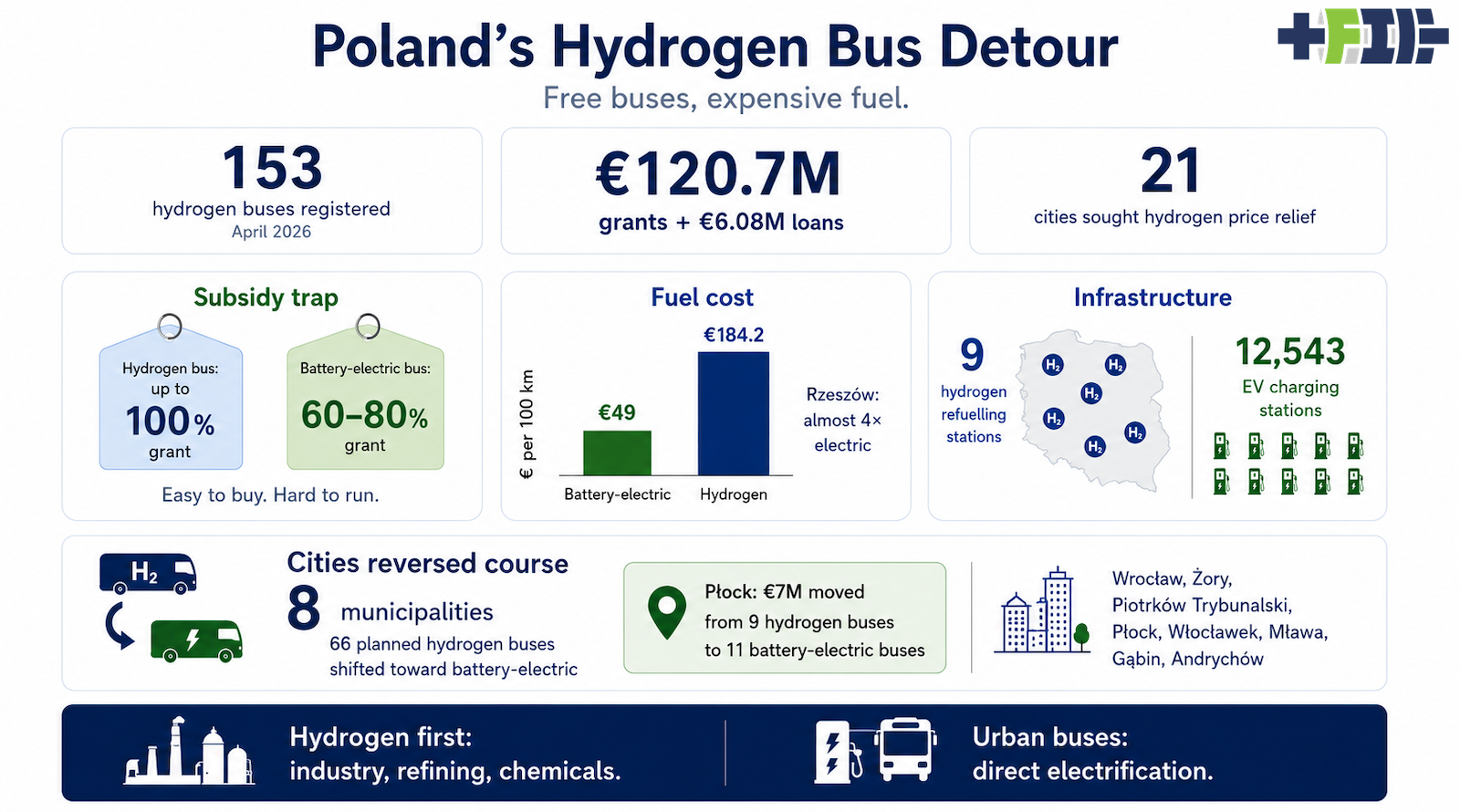
Poland's ambitious rollout of hydrogen fuel cell buses has hit a harsh reality: fuel costs are soaring far beyond projections, according to a bombshell report from CEE Bankwatch released today. Transit agencies across the country are now grappling with bills that are 3–4 times higher than initially budgeted.
"The operational costs we're seeing are unsustainable," says Dr. Anna Kowalski, a transport economist at the University of Warsaw. "These hydrogen buses were sold as the future, but the present is a fiscal nightmare."
Background: Poland's Hydrogen Bet
In 2023, Poland committed over €200 million to purchase 500 hydrogen buses, aiming to cut emissions and lead Europe in zero-emission transit. The vehicles were procured from various manufacturers, touted for their long range and fast refueling.
However, the May 2026 report Hydrogen buses in Poland: Where did it all go wrong? documents a sharp gap between promotional brochures and real-world costs. Fuel prices, often subsidized in pilot phases, have spiked as contracts expire.
The Soaring Costs
The report reveals that per-kilometer fuel expenses for hydrogen are now €1.20, compared to €0.35 for diesel and €0.15 for electric buses. Even with EU grants, municipalities are bleeding cash.
- Fuel purchase: Hydrogen prices have risen 40% since 2024, driven by supply bottlenecks.
- Infrastructure: Specialized refueling stations require constant maintenance, adding 20% to operational budgets.
- Fleet downtime: Hydrogen buses average 15% more maintenance days than electric equivalents.
What This Means: A Wake-Up Call for the Industry
The Poland case threatens to cool global enthusiasm for hydrogen in urban transit. "This is a reality check for cities considering similar fleets," says Markus Engel, senior policy analyst at CEE Bankwatch. "The economics simply don't add up without massive, ongoing subsidies."
Some transit authorities are already pivoting back to battery-electric models, which have seen rapid cost declines. The report recommends that Poland renegotiate hydrogen supply contracts or invest in domestic green hydrogen production.
Quotes from Experts
"We were sold a dream, but we're paying with real taxpayers' money," says Piotr Nowak, a city councillor in Poznań, where 40 hydrogen buses now idle due to budget constraints. "We need immediate relief or a exit strategy."
Dr. Kowalski adds: "The technology isn't dead, but the hype was premature. Costs will come down, but not fast enough for current budgets."
Immediate Impact
Several Polish operators have suspended new hydrogen bus orders and are seeking legal advice on contract terms. The national government has called an emergency meeting with manufacturers for next week.
Meanwhile, environmental groups caution against abandoning hydrogen altogether, arguing that it remains vital for heavy-duty transport. But for now, the Polish experiment serves as a cautionary tale.
Related Articles
- Exodus (EXOD) UFC Deal and Money Platform: Key Questions Answered
- Bitcoin Open 2026 at Glen Abbey: Everything You Need to Know
- How to Understand the Biggest Political Donor in the 2022 US Midterms: A Guide to a16z's $115M+ Spending
- 8 Critical Steps to Operationalize Responsible AI at Enterprise Scale
- Design Systems Stifle Innovation: Experts Urge Embrace of 'Dialects' to Break Free from Consistency Trap
- Using AI Agents to Scale Procurement Expertise: A Q&A Guide
- When AI Switches Languages: How Code Shifts a Chinese Prompt to Korean Responses
- 5 Key Developments in the Microsoft Israel Ethics Investigation and Leadership Exit