8 Key Facts About Kazakhstan’s Renewed Coursera Partnership for Higher Education
The rapid pace of digital transformation is reshaping labor markets worldwide, forcing universities to rethink how their curricula connect to real-world careers. Kazakhstan’s Ministry of Science and Higher Education has been at the forefront of this change, and their renewed partnership with global online learning provider Coursera marks a significant milestone. Below are 8 essential facts about this collaboration—from AI literacy initiatives to language adaptations—that highlight how the country is preparing its students for the global digital economy.
- 1. Renewed Partnership for World-Class Learning
- 2. For-Credit Learning with Transferable ECTS Credits
- 3. Massive Expansion of Course Access
- 4. Focus on Artificial Intelligence and the AI-Sana Initiative
- 5. Over 1,100 GenAI Courses Available
- 6. Kazakh Language Translation of Key Courses
- 7. Industry-Recognized Certifications in High-Demand Fields
- 8. Impressive Student Reach and Certificate Growth
1. Renewed Partnership for World-Class Learning
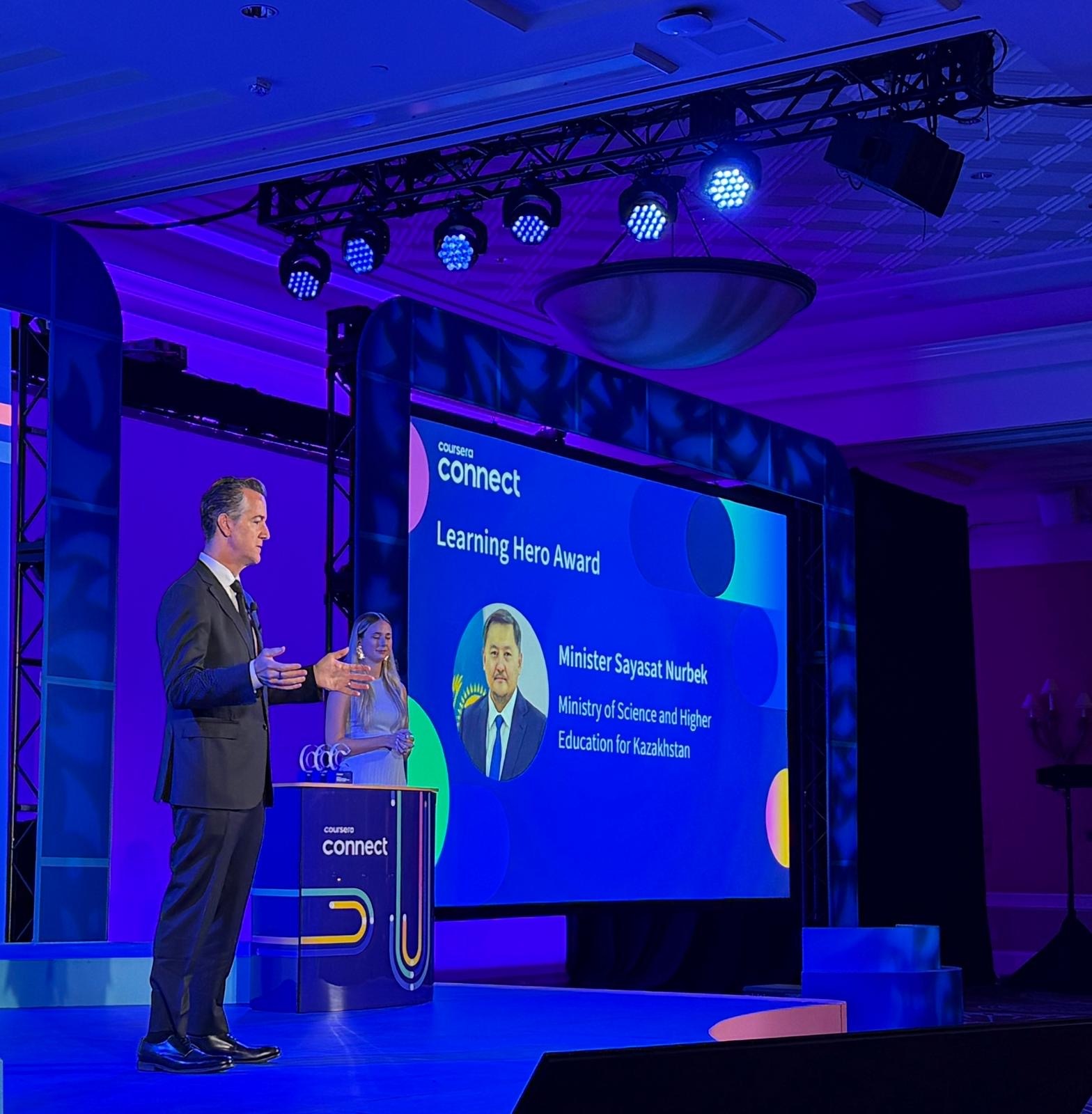
Kazakhstan’s Ministry of Science and Higher Education has formally renewed its collaboration with Coursera, solidifying the integration of top-tier online education into the national higher education system. This renewal builds on the success of the initial partnership established in 2022, which has already equipped tens of thousands of students with critical human, digital, business, and AI skills. By continuing this alliance, the Ministry aims to ensure every Kazakh learner can access the best educational resources from leading global universities and companies. The renewed agreement also deepens the commitment to bridging the gap between academic curricula and the fast-evolving demands of the digital economy, providing students with the tools they need to thrive in a competitive global job market.
2. For-Credit Learning with Transferable ECTS Credits
A cornerstone of the partnership is the ability for students to take Coursera courses for credit. This means that instead of simply auditing courses, Kazakh students can earn official, transferable European Credit Transfer and Accumulation System (ECTS) credits that count toward their degrees. This for-credit integration transforms online learning from an optional supplement into a fundamental component of higher education. Students complete job-relevant certifications and see those achievements reflected in their academic transcripts. This system not only accelerates skill acquisition but also ensures that the learning is formally recognized across universities, both within Kazakhstan and internationally. It’s a practical way to modernize higher education curricula without reinventing the wheel, leveraging Coursera’s vast library of 13,500 courses.
3. Massive Expansion of Course Access
Through Coursera for Campus, Kazakh students now have access to a staggering 13,500 courses from more than 375 of the world’s leading companies and universities. This includes content from top-tier institutions like Stanford, Yale, and Google, as well as specialized offerings from cutting-edge AI companies such as Anthropic. The breadth of subjects covers everything from the humanities to advanced engineering, but with a particular emphasis on high-demand fields like data science, cybersecurity, and artificial intelligence. This massive expansion is a key part of the Ministry’s strategy to modernize higher education curricula, ensuring that students are learning the most current skills and knowledge. The courses are integrated into existing university programs, making it easy for institutions to adopt and for students to enroll.
4. Focus on Artificial Intelligence and the AI-Sana Initiative
Artificial intelligence literacy is a national priority for Kazakhstan. The renewed partnership directly supports the AI-Sana initiative, which aims to equip every graduate with a foundational understanding of generative AI and digital ethics. Through Coursera, students gain widespread access to introductory courses like Google AI Essentials, as well as more advanced content from innovative companies. The goal is to ensure that no student, regardless of their major, enters the workforce without basic AI skills. This forward-thinking approach recognizes that AI will impact every industry, from healthcare to finance to education. By embedding AI learning into the curriculum, Kazakhstan is preparing its youth to not only use AI tools but also to understand their implications, fostering responsible innovation and ethical use.
5. Over 1,100 GenAI Courses Available
The partnership provides Kazakh students with access to more than 1,100 courses focused on generative AI and related technologies. This collection includes content from many of the world’s most innovative AI companies, such as Building with the Claude API from Anthropic. The sheer volume of GenAI courses ensures that students can choose from introductory overviews to specialized, hands-on training. This resource is particularly valuable for the AI-Sana initiative, as it offers a scalable way to teach AI literacy to tens of thousands of students simultaneously. Instructors can integrate these courses into their syllabi, and students can earn certificates that demonstrate their proficiency. This comprehensive library positions Kazakhstan as a leader in AI education within Central Asia.
6. Kazakh Language Translation of Key Courses
To overcome language barriers and promote the Kazakh language in online education, the Ministry has overseen the translation of over 4,000 courses into Kazakh. These courses focus on priority topics such as artificial intelligence, generative AI, data science, and machine learning. This effort ensures that students who are more comfortable learning in their native tongue can still access the world’s best educational content. It also strengthens the role of the Kazakh language in higher education and technology, making it a living language of modern scholarship. The initiative supports cultural preservation while equipping students with globally relevant skills. By offering courses in Kazakh, the Ministry removes a significant barrier to entry and fosters greater inclusivity in higher education.
7. Industry-Recognized Certifications in High-Demand Fields
Students enrolled through the partnership can earn industry-recognized certifications in fields that are critical to the global digital economy. These include Data Science, Cybersecurity, AI, Engineering, and Finance. These certifications are not just academic badges; they are verifiable credentials that employers worldwide recognize and value. For students, this means they can demonstrate concrete skills to potential employers, improving their job prospects upon graduation. For Kazakhstan, this aligns with the national strategy to develop a highly skilled workforce capable of driving economic diversification and digital transformation. The certifications are stackable as well, allowing students to build expertise gradually and combine multiple credentials to specialize in a particular area.
8. Impressive Student Reach and Certificate Growth
Since the partnership began in 2022, the results have been remarkable. Over 235,000 students have been reached across more than 100 Kazakhstani universities. Collectively, these students have earned over 500,000 certificates, demonstrating tremendous engagement and commitment to skill development. This impressive reach shows that the integration of online learning is not just a policy decision but a working reality that has already touched a significant portion of the country's student population. The continued growth in certificate numbers indicates that students are not only enrolling but completing courses and gaining verified skills. This data underscores the effectiveness of the partnership in scaling world-class education and building a future-ready workforce.
In summary, Kazakhstan’s renewed partnership with Coursera is a comprehensive, multi-faceted effort to modernize higher education. From for-credit learning and AI literacy to language inclusion and industry certifications, the initiative addresses the key challenges of the 21st-century labor market. As the country continues to embrace digital transformation, this collaboration serves as a model for how national education systems can leverage global resources to empower students and drive economic growth.
Related Articles
- Mastering Data Wrangling at Scale: From Raw Data to Enterprise AI Readiness
- 6 Key Insights Into the ISTE+ASCD Voices of Change Fellowship for 2026-27
- Canvas Learning Platform Restored After Cyberattack Disrupts Global School Finals
- How to Evaluate Your API Portal for AI Agent Readiness
- Navigating the Cyber Threat Landscape: A Guide to Analyzing the May 11th Threat Intelligence Report
- 7 Groundbreaking Programs Launching on Coursera to Bridge Skills Gaps in the AI Era
- 8 Ways Coursera Is Preparing Learners for an AI-Driven Workforce
- Inside GTA 6's Sky-High Budget: AI Solutions and Industry Challenges