10 Groundbreaking AI Innovations by Students and Young Pioneers That Won OpenAI's $10,000 Prize
Introduction
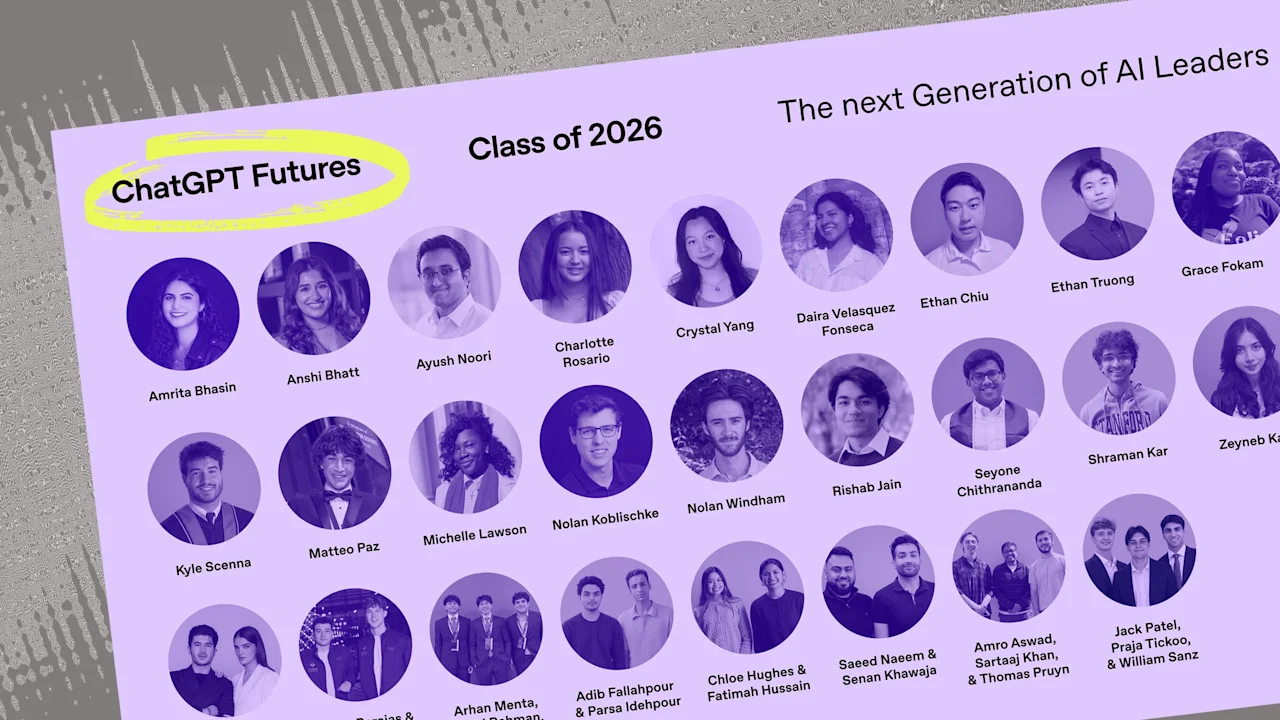
When OpenAI launched the ChatGPT Futures program, it aimed to spotlight how the first generation to grow up with ChatGPT — the Class of 2026 — is using artificial intelligence for real-world good. The result? 26 young innovators each received a $10,000 grant for projects that tackle everything from accessibility to space exploration. In this article, we explore 10 remarkable ideas that earned this prestigious award, showcasing how these students are not just consumers of AI but creators shaping the future. From audio games for the blind to AI models that suggest new drug candidates, these projects demonstrate the power of youthful ingenuity paired with cutting-edge technology. Let's dive into the stories behind the grants.
1. Championing Accessibility with Audio Games
Crystal Yang, a University of Pennsylvania student, turned a high-school frustration into a mission. Her blind friend couldn't play Wordle, so Yang collaborated with Texas A&M researchers to design conversational audio interfaces for the game. This led to Audemy, a nonprofit that has created over 50 audio-powered games for blind and visually impaired players. Now, Audemy is building an accessible gaming console that uses audio and tactile feedback and works without Wi-Fi. Yang's work proves that AI can bridge gaps in social experiences, making fun and learning inclusive for everyone.
2. How AI Amplifies a Young Founder's Impact
For Crystal Yang, AI isn't just a product — it's a personal multiplier. She uses AI tools to code, manage projects, conduct user research, and write formal papers. When prototyping the Audemy console, AI helped her learn computer-aided design and evaluate components. “It’s been a very helpful tool throughout, allowing me to champion the issues I’m passionate about,” she says. This story underscores how modern AI empowers young entrepreneurs to overcome skill gaps and amplify their capabilities, turning bold ideas into tangible solutions.
3. The ChatGPT Futures Program: Cultivating the Next Generation
OpenAI's ChatGPT Futures program awarded $10,000 each to 26 students and young people. The goal: showcase how the graduating class of 2026 — the first to have ChatGPT available throughout nearly their entire college experience — uses AI for social good. Leah Belsky, OpenAI's head of education, notes, “These students are using AI to build things that many wouldn’t have previously thought were possible.” The program highlights a paradigm shift where AI literacy from an early age leads to unprecedented innovation.
4. Building Space Robots to Assist Astronauts
Among the honorees are students developing AI-powered space robots that can perform routine tasks, freeing astronauts for more critical work. These robots leverage computer vision and autonomous navigation to handle maintenance and experiments in zero gravity. The project shows how AI can extend human reach beyond Earth, making space exploration safer and more efficient. It's a prime example of young minds applying AI to solve the logistics of living and working in orbit.
5. Detecting Disaster Survivors Through Walls Using Wi-Fi
One team created a novel way to spot disaster survivors hidden under debris or behind walls — using Wi-Fi signals. By analyzing how signals bounce off obstacles, their AI algorithm can detect human presence, breathing, and movement. This technology could revolutionize search-and-rescue operations, saving lives in earthquakes, building collapses, and avalanches. It combines signal processing with machine learning to turn everyday wireless infrastructure into a life-saving tool.
6. Protecting Seniors from Online Scams
Another prize-winning project uses AI to shield older adults from online scams. The system monitors communications and flags suspicious patterns typical of phishing, romance scams, or fraudulent offers. It provides real-time alerts in a gentle, user-friendly way, respecting the user's independence while adding a layer of protection. This initiative addresses a growing crisis, as scammers increasingly target senior citizens, and demonstrates how AI can serve vulnerable populations.
7. Empowering Street Vendors with Financial Tools
In Latin America, street vendors often lack access to formal financial tracking. A student-led project uses AI to help them manage income, expenses, and inventory via simple voice commands and text messages. The system can translate and respond in local languages, making it accessible even for those with low literacy. By bringing digital financial literacy to the informal economy, this innovation empowers entrepreneurs to grow their businesses and achieve economic stability.
8. Predicting Protein Functions for Medical Breakthroughs
Several students are applying AI to science and medicine. One project focuses on predicting the functions of proteins in the body — a key to understanding diseases and developing drugs. Machine learning models analyze vast genomic data to assign roles to unknown proteins, accelerating research in areas like cancer, infectious diseases, and genetic disorders. This work could drastically cut the time needed for drug discovery and open new therapeutic avenues.
9. Revolutionizing Drug Production and Mental Health Access
AI is also optimizing drug production, making manufacturing processes more efficient and sustainable. Another initiative connects people with local mental health resources through a smart chatbot that uses natural language processing to triage needs and recommend relevant services. Both projects highlight how AI can streamline healthcare — from lab to community — reducing costs and improving outcomes for patients worldwide.
10. Uncovering New Treatments for Neurological Diseases with Graph AI
Ayush Noori, a Harvard graduate and Rhodes Scholar at Oxford, developed Proton — a graph AI model that generates hypotheses around neurological diseases. Inspired by caring for his late grandmother with a rare neurodegenerative disease, Noori trained Proton on biomedical literature and data. The model has already suggested candidate drugs for bipolar disorder and Alzheimer’s, validated through lab experiments and health record analysis. This shows how AI can accelerate preclinical research and offer hope for conditions with few treatments.
Conclusion
From accessible gaming to space robotics and disease detection, these 10 projects represent just a fraction of what young innovators can achieve with AI. The OpenAI ChatGPT Futures grants not only reward ingenuity but also send a powerful message: the next generation is ready to leverage technology for the greater good. As AI tools become more integrated into education and daily life, we can expect even more transformative ideas to emerge. These students are already proving that the future is not something to wait for — it's something they are building, one $10,000 idea at a time.
Related Articles
- Summer Journalism Internship at Carbon Brief: Learn Climate Reporting in London
- 5 Key Insights into Magic: The Gathering's The Hobbit Set and Its Reprints from Tales of Middle-earth
- The Hidden Impact of Data Normalization on Machine Learning Success
- Markdown Adoption Surges as Essential GitHub Skill for Developers
- Cadillac Builds 685-HP V8 Manual Sedan – But It's Not for Sale
- Social Media’s Structural Collapse: Why Tweaks Won’t Work and What’s Next
- How to Accelerate NetSuite Customizations Using SuiteCloud Agent Skills with AI Coding Assistants
- Web Development's Relentless Cycle: Why the Only Constant Is Change