10 Hidden Mathematical Secrets Plants Use to Survive on Sunlight
Living on sunlight is a high-stakes game for plants. The sun doesn’t just offer gentle morning rays — it can bombard leaves with damaging ultraviolet radiation, fluctuate from shade to blazing intensity in seconds, and even cause DNA breaks. Yet plants thrive, using an invisible mathematical choreography to capture energy while avoiding harm. This listicle reveals ten astonishing ways plant cells perform a hidden dance with numbers and geometry to harness light safely and efficiently.
1. The Risky Business of Solar Feasts
Plants face a fundamental challenge: sunlight is both life-giving and potentially lethal. Ultraviolet waves can snap DNA strands and degrade vital molecules, while the sheer variability of light intensity — from soft morning glow to midday blaze, from cloud cover to full sun — makes steady energy capture tricky. Think of a cloud obscuring the sun, reducing light by 90% in an instant, then vanishing just as quickly. Plants must pivot between famine and feast, relying on internal mathematical models to adjust photosynthesis in real time. This constant recalculation is the foundation of their survival.
2. The Fibonacci Pattern in Leaf Arrangement
Have you ever noticed how leaves spiral around a stem? They often follow Fibonacci numbers (1, 1, 2, 3, 5, 8…) to optimize light interception. This arrangement, called phyllotaxis, minimizes shading and maximizes exposure to the sun’s rays. Each new leaf is positioned at an angle of about 137.5 degrees — the golden angle — relative to the previous one. Mathematically, this ensures that no leaf directly blocks the one above, a perfect natural algorithm for harvesting light in crowded canopies.
3. Chloroplasts: The Tiny Solar Trackers
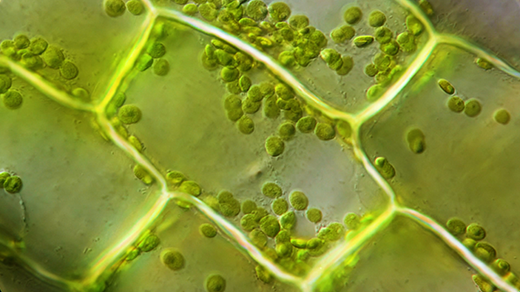
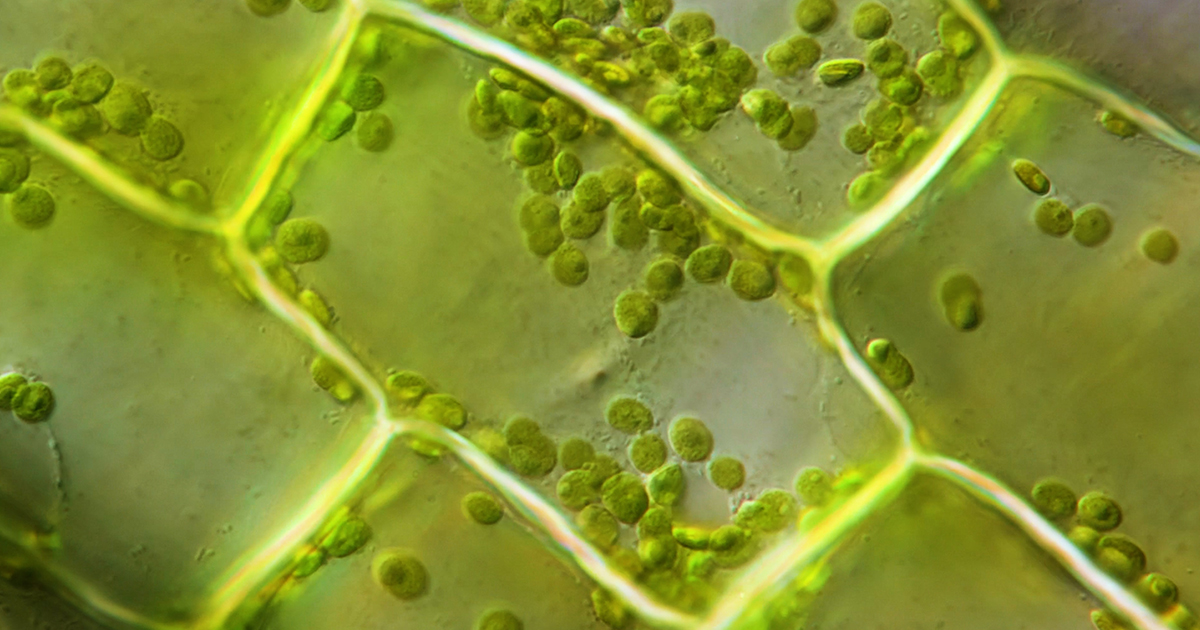
Within each plant cell, chloroplasts are not static. They can move along the cytoskeleton to avoid damage or capture more light. In dim conditions, they spread out to form a monolayer under the cell membrane, effectively acting like solar panels. In bright light, they stack to shield themselves, reducing absorption. This movement is governed by a delicate balance of actin filaments and motor proteins, a microscopic ballet that follows mathematical rules of distribution — minimizing exposure while maximizing energy capture. (See also #5)
4. The Quantum Efficiency Dance
The light-harvesting complexes (LHCs) in chloroplasts capture photons with astonishing precision. Each absorbed photon transfers energy to a reaction center, but the process involves quantum coherence. Recent studies show that energy moves through multiple pathways simultaneously, and the system “chooses” the most efficient route using interference patterns. This quantum dance, described by wave equations and probability amplitudes, allows nearly 100% efficiency under ideal conditions — a mathematical feat that engineers still aspire to replicate.
5. Non-Photochemical Quenching: The Safety Valve
When light is too intense, plants must dissipate excess energy to prevent damage. They do this via non-photochemical quenching (NPQ), a mechanism that converts absorbed light into harmless heat. The speed and magnitude of NPQ are finely tuned: too little and cells burn, too much and photosynthesis suffers. This process involves the xanthophyll cycle and pH gradients, all governed by feedback loops that can be modeled mathematically as a negative control system. It’s a real-time balancing act dictated by calculus.
6. The Circadian Rhythm as a Light Predictor
Plants don’t just react to light — they anticipate it. Their internal circadian clock, based on a network of gene expression loops, predicts sunrise and sunset. This oscillator runs on a roughly 24-hour cycle and adjusts photosynthetic activity accordingly, even in constant darkness. The mathematical framework behind this is a set of coupled differential equations representing the interactions of proteins like TOC1 and LHY. By predicting light changes, plants can pre-position chloroplasts and enzymes for maximum efficiency.
7. The Red-Edge Effect and Spectral Mathematics
Plants absorb mainly red and blue light, reflecting green. But the “red-edge” — a sharp rise in reflectance near 700 nm — is a key marker of vegetation health. This phenomenon arises from the balance between chlorophyll absorption and leaf structure. Mathematically, the shape of this spectrum can be modeled using the PROSPECT model, which simulates leaf optical properties based on biochemical content. Agriculturists use these spectral curves to assess crop vigor, a direct application of plant secret numerical codes.
8. The Z-Scheme: Electron Transport Choreography
Photosynthesis’s light reactions follow the “Z-scheme,” where electrons are boosted to higher energy levels by two photosystems (PSII and PSII). This energy transfer is a precise sequence: each photon excites an electron, which then moves through a chain of carriers, dropping energy in steps. The entire process can be described by redox potentials and thermodynamic cycles. Plants must balance the flow: too many electrons cause backpressure and damage, so the system uses feedback loops to regulate the rate — a dance of kinetic constants.
9. Leaf Venation as Transport Networks
The intricate veins in leaves are more than just plumbing. They form hierarchical networks that minimize resistance while maximizing resource distribution. These patterns often follow Murray’s law (the cube of the radii of parent and daughter branches) and fractal self-similarity. Mathematical analysis shows that such networks are optimized for both hydraulic efficiency and mechanical support. The leaf literally engineers itself using geometry and flow equations to supply every cell with water and nutrients for photosynthesis.
10. Evolutionary Optimization Over Millions of Years
Every mathematical trick plants use today is the product of millions of years of evolutionary selection. Natural selection has fine-tuned parameters like leaf angle, stomatal density, and chlorophyll concentration to local light environments. Evolutionary algorithms mimic this process, but nature had a head start. The result is a living calculator that continuously adjusts to changing light — a hidden dance that began long before humans discovered numbers. (Back to start)
From Fibonacci spirals to quantum coherence, the plant cell’s hidden mathematical dance is a testament to nature’s ingenuity. By understanding these numerical marvels, we can better appreciate the silent, intricate calculations that keep every leaf green and thriving — even when the sun plays tricks.
Related Articles
- Halo Infinite Surprises Players with New Gauntlet PvE Mode Amidst Post-Launch Lull
- 10 Surprising Facts About Game Quest: The Backlog Battler
- Mastering Strixhaven: Top Combo Strategies in Magic: The Gathering
- 10 Key Facts About the Magic: The Gathering One Ring Plagiarism Controversy
- Asus ROG Strix XG129C: Your Questions Answered About the New Secondary Touchscreen Monitor
- 5 Unbeatable Tech Deals This Week: Galaxy Tab, S26 Ultra, Fire Stick, and More
- Anbernic RG Rotate: Affordable Portable Gaming with Flip-Out Display
- Turtle Beach Stealth Pro 2 Challenges SteelSeries Nova Pro Omni at $50 Lower Price – Early Review