New DNA Discoveries Unravel the Fate of Franklin's Lost Arctic Expedition
The mysterious disappearance of Sir John Franklin's 1845 Arctic expedition to navigate the Northwest Passage has captivated historians for nearly two centuries. Now, cutting-edge DNA analysis is shedding new light on the remains of its ill-fated crew. Recent studies published in the Journal of Archaeological Science and Polar Record have identified four more crew members, bringing the total of known individuals to eight. These breakthroughs not only honor the fallen but also piece together the tragic events that unfolded after the ships became trapped in ice.
What was the Franklin expedition and why did it become an enduring mystery?
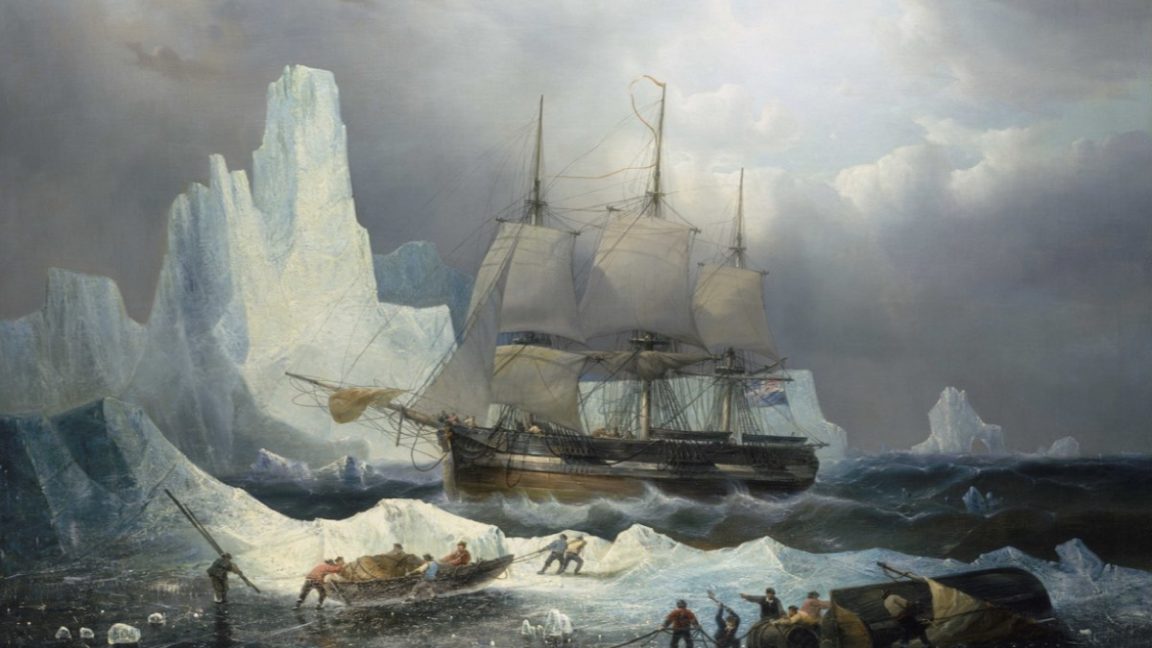
In May 1845, Captain Sir John Franklin led two ships, HMS Erebus and HMS Terror, on a mission to chart the Northwest Passage through the Canadian Arctic. After departing England, the expedition was last seen by whalers in Baffin Bay in July 1845. The ships later became icebound in Victoria Strait, and all 129 crew members perished. The mystery deepened because no original eyewitness accounts survived—only scattered artifacts, graves, and notes. For decades, historians pieced together events from recovered documents, including a note from April 1848 signed by Captain James Fitzjames, detailing Franklin's death in June 1847 and the plan to abandon the ships. The complete loss of life without a single survivor turned the expedition into a legendary puzzle, sparking searches, scientific investigations, and popular imagination.
What new breakthrough have archaeologists achieved using DNA analysis?
Archaeologists have successfully extracted and analyzed ancient DNA from skeletal remains found on King William Island and other sites. According to two recent papers—one in the Journal of Archaeological Science and another in the Polar Record—they have identified four more crew members. These individuals join three previously identified sailors from beechey Island graves and one from earlier DNA work. The process involves comparing genetic markers from the remains with known descendants of Franklin's crew, many of whom had signed up from tight-knit communities in England. The new identifications include Warrant Officer John Gregory of the Erebus, and three other officers or ratings, whose names expand the historical roster and provide family closure. This work demonstrates the power of modern genetics to solve cold-case historical mysteries.
How did the crew members die, and what was the sequence of events?
After overwintering on Beechey Island in 1845–46, where three crewmen died and were buried, the expedition sailed south into Victoria Strait. There, the ships became locked in ice near King William Island in September 1846. Franklin died on June 11, 1847, likely from illness or starvation. A note left by Fitzjames states that 105 survivors abandoned the ships in April 1848, attempting to hike overland to a Hudson Bay Company outpost. However, they faced extreme cold, scurvy, lead poisoning (from poorly soldered food tins), and starvation. Many perished along the trek, their bodies scattered. Some evidence suggests cannibalism occurred among desperate survivors. The last known date of life is April 25, 1848, but isolated groups may have lingered for months. Ultimately, no one reached safety.
Who are the four newly identified crew members, and how were they confirmed?
The four newly identified individuals include John Gregory, a warrant officer on HMS Erebus, and three others whose names are now documented through DNA matching. Their remains were recovered from various locations on King William Island, where crew members died during the overland escape. The confirmation process involved extracting DNA from teeth or bones and comparing it with samples from living descendants. For example, Gregory's descendants provided a direct match. The researchers also cross-referenced historical records, such as crew lists and family trees, to ensure accuracy. These identifications add to the three crewmen buried on Beechey Island (identified earlier) and one other from previous DNA work. Each new name helps reconstruct the social network aboard the ships and honors those who died.
Why is the Franklin expedition significant in historical and scientific contexts?
The Franklin expedition is historically significant because it represented the peak of British Arctic exploration efforts. Its catastrophic failure led to decades of search missions that ultimately mapped much of the Canadian Arctic and Northwest Passage. The tragedy also highlighted the dangers of relying on untested technology (like steam engines and tinned food) and inadequate clothing. Scientifically, the DNA identification project showcases how modern forensic methods can unravel century-old cold cases. The remains provide data on isotopic signatures, diet, and health. Additionally, the expedition's story informs climate change studies, as the ice conditions that trapped Franklin are now understood better. The public fascination continues with books, documentaries, and the recent discovery of the wrecked ships Erebus (2014) and Terror (2016).
How does DNA analysis help in understanding the fate of the expedition?
DNA analysis offers precise identification of individuals, allowing researchers to link specific remains to known crew members. This helps reconstruct who died where and under what circumstances. By identifying multiple crewmen, scientists can map the movements of groups during the final escape attempt. Furthermore, DNA can reveal familial relationships among the crew, possibly indicating that some members were related (though none have been found yet). The genetic data also enables studies of ancient pathogens or dietary isotopes. For instance, analyzing tooth enamel can show where a person grew up, confirming whether a crew member was from the UK or elsewhere. Combined with archaeological excavation and historical records, DNA fills crucial gaps. It transforms scattered bones into named individuals, providing dignity and closure to their descendants.
Related Articles
- NHS Security Move Sparks Fury: Open-Source Code Withdrawn Over AI Threat
- 6 Cybersecurity Stories That Flew Under the Radar This Week
- Machine-Speed Defense: How Automation and AI Reshape Cybersecurity Execution
- Data Gaps Beyond the Endpoint: Unit 42 Urges Broader Detection Strategy
- 6 Critical Lessons from the CPU-Z Watering Hole Attack: How SentinelOne Stopped a Supply Chain Breach
- DarkSword iOS Exploit Chain: A Growing Threat Across Multiple Actors and Regions
- CISA's CI Fortify Initiative: Strengthening Critical Infrastructure Against Geopolitical Cyber Threats
- Securing Your Node.js Supply Chain: From Malware to Mitigation